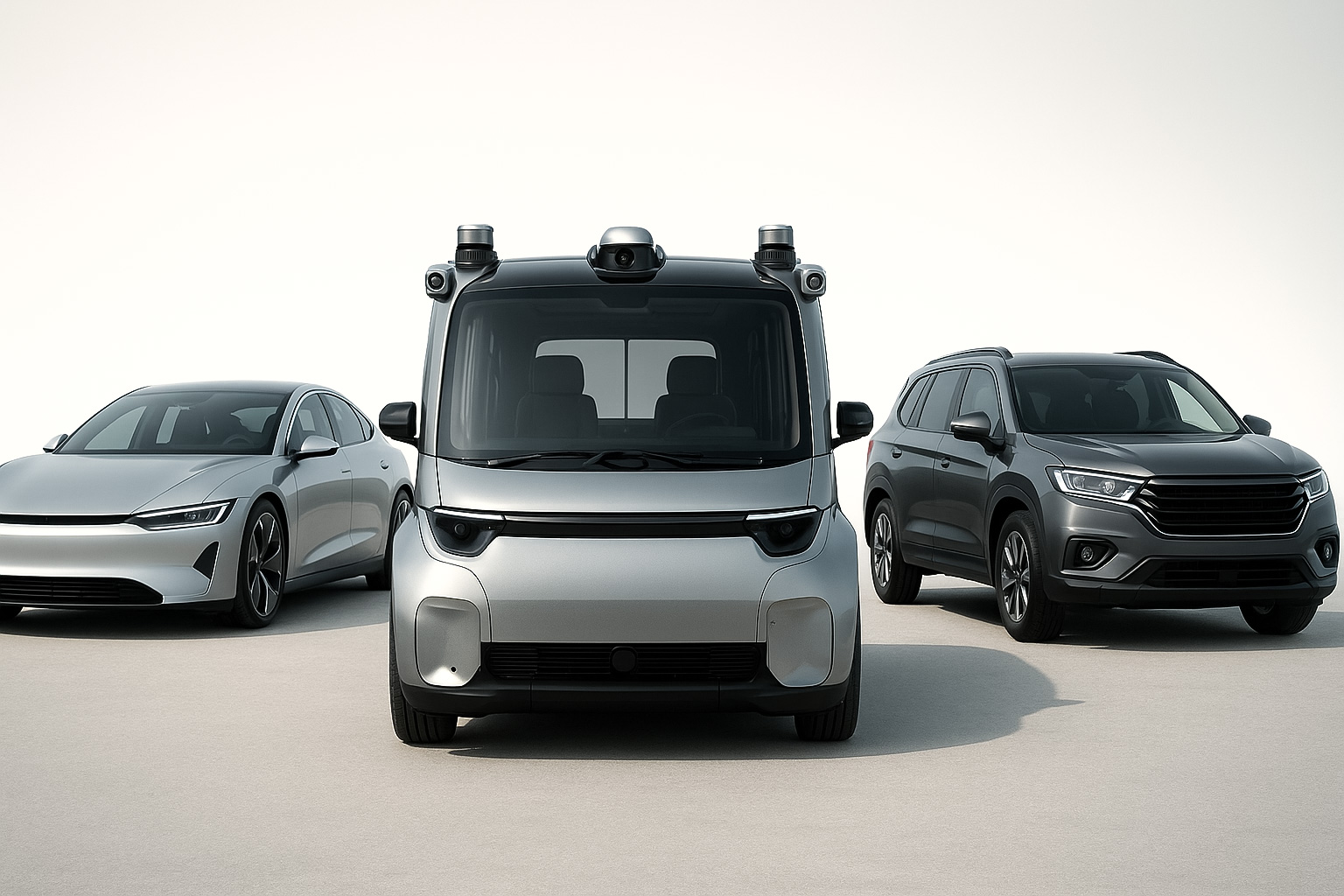
Picture this: you step outside, summon your family car with a tap, and a sleek, driverless vehicle glides to your doorstep. No steering wheel, no pedals—just a lounge-like space ready for your next adventure. Science fiction? Not anymore. The age of autonomous cars is upon us, and if you believe the buzz, everything about cars is about to change. But will it really be the end of cars as we know them? Or will the next generation of cars feel… surprisingly familiar?

A World Without Drivers?
Let’s imagine what happens when you take the human driver out of the equation. Suddenly, all the rules of car design are up for grabs. No more dashboards dominated by giant steering wheels, no pedals to dictate where your feet go, no rearview mirrors breaking up the clean lines of a roof. Designers are free to invent layouts and shapes we’ve never seen before. That’s why you see concept vehicles like Zoox’s pod—completely symmetrical, bi-directional, and as close to a rolling living room as you can get. Slide into one of these, and you might think you’ve entered a futuristic lounge or a high-tech waiting room on wheels.
But while these so-called “Frankenstein pods” are visually striking, they’re often optimized for a very specific use case: low-speed, shared urban shuttles, where maximum cabin space and easy access matter more than style or speed. Sure, they turn heads. But are they really what most people want to park in their garage for everyday driving and highway travel?

The Pull of the Familiar
Here’s where reality sets in. As radical as some autonomous designs are, when it comes to the cars we’ll actually own or ride in every day, many of the classic proportions and familiar silhouettes stick around. Why? Because so much of what makes a great car—comfort, efficiency, safety, and emotional appeal—has already been honed by a century of evolution.
Take the latest concepts from companies like Tesla or BYD: their autonomous vehicles still have flowing, aerodynamic shapes, big glass areas for a panoramic view, and proportions that wouldn’t look out of place in today’s showroom. Even with all the cutting-edge tech, battery-electric powertrains, and hidden sensors, these cars still look, well, like cars.
Why not go full pod? For one, aerodynamics matter. Sleek, teardrop shapes are still the best way to get maximum range from an EV, which is essential for road trips and long journeys. For another, safety regulations and crash standards favor certain structures and layouts. And let’s be honest—most drivers still want a vehicle that looks stylish and reassuring, not something out of a sci-fi experiment.

Blending Old and New
The real revolution, then, is under the surface. Autonomous cars are packed with advanced sensors, AI brains, and redundant safety systems, but these can be beautifully integrated—think panoramic roofs, flush handles, and discrete cameras instead of clunky hardware domes. Inside, you might see more flexible seating: swiveling captain’s chairs, perhaps, or a minimalist dash. But even here, tradition persists. People like facing forward, having windows to look out, and a sense of space that feels “car-like.”
Manufacturers are experimenting—mixing lounge-like interiors with tried-and-true layouts, blending pod concepts for shared robo-taxis with sleek sedans and crossovers for personal ownership. The most successful designs aren’t the wildest—they’re the ones that balance innovation with what drivers and families already love.

The Future: Evolution, Not Extinction
So, is this really the end of cars as we know it? Not quite. While autonomous technology is shaking up everything from city mobility to the driving experience, the car as an object is proving surprisingly resilient. We’ll still see vehicles with familiar shapes and design cues, just reimagined for a new era of safety, comfort, and intelligence. Sure, some urban shuttles might look like futuristic breadboxes—and that’s fine for city centers. But on the open road, or parked in your driveway, the autonomous cars of the future will evolve, not replace.
Take Tesla, for example. The much-publicized launch of its Robotaxi service in Austin, Texas, uses fleets of Model Ys—cars that look just like the ones you see every day on the road. These Model Ys might appear ordinary on the outside, but they are fully capable of autonomous driving, quietly proving that radical change can happen under a familiar skin. Tesla is also preparing to launch a purpose-designed Cybercab, promising a glimpse of how dedicated autonomous vehicles might look and operate in the near future.
In other words: get ready for smarter, safer, and more stylish rides—but don’t expect the end of the car as we know it. Instead, expect the next great chapter in its story.

Leave a Reply