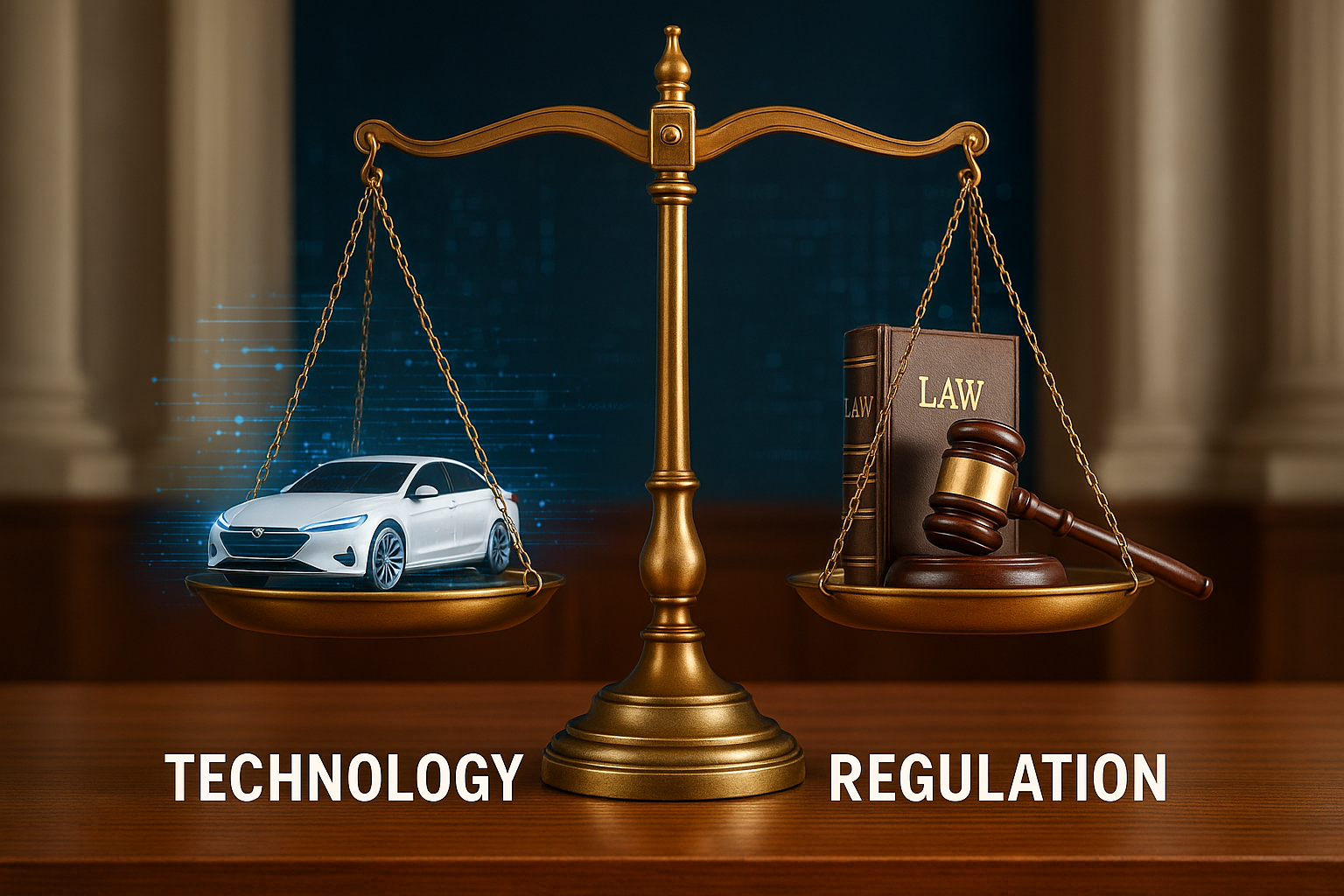
We’ve been sold a dream of self-driving cars – a future where we sit back, relax, and let artificial intelligence chauffeur us through life. But as test vehicles roll through public streets and tech giants race to out-innovate each other, a difficult truth becomes clear: autonomy without accountability is a crash waiting to happen.
While autonomy holds enormous promise in reducing accidents and saving lives, its success hinges not just on technology – but on governance. Tesla’s vision of a fully self-reliant, AI-driven vehicle network once promised a “Fleet Awakens” moment, where millions of cars would transform into robotaxis overnight. But instead of an overnight revolution, what we’re seeing is a slow, cautious rollout. A handful of vehicles, operating in carefully geofenced areas, illustrates the deeper truth: autonomy cannot scale without structure. This isn’t a failure of innovation – it’s a call for disciplined frameworks. Without it, autonomy will remain stuck in first gear.

A Federal Framework, Not a State-by-State
One of the biggest roadblocks to scaling autonomous driving (in US) is the absence of a unified legal structure. Today, autonomous vehicles navigate a fragmented map of local rules – where one city welcomes full driverless testing and another bans it outright. That’s not just confusing; it’s dangerous.
Imagine if each state had its own seatbelt laws, crash test protocols, or definitions of roadworthiness. We’ve long known that safety standards must be national. Autonomy deserves the same level of oversight. A federal framework should define what qualifies a vehicle as autonomous, establish minimum safety and data standards, and lay out liability protocols when things go wrong. In short, cars shouldn’t be subject to shifting rules every time they cross a border.
Some Roads Can’t Handle Autonomy And That’s Okay
There’s a stark difference between a low-speed scrape on a city street verses a high-speed crash on an expressway. While city AV mishap is a fender bender, an error on the highway is far more likely to be fatal.
That’s why we should stop pretending all roads are created equal. Instead of aiming for AVs to operate everywhere, we can start by certifying specific routes for high-trust deployment. Imagine dedicated AV lanes on intercity expressways, government-certified corridors clean lane markings, and real-time hazard monitoring.
Think of them like regulated airspace for aircraft: controlled environments where advanced systems can perform safely and predictably.

Let the Roads Speak a Language Cars Understand
One of the most overlooked challenges for autonomous driving is the inconsistency of real-world road signs, especially temporary ones. Detour signs scribbled in marker, cones dropped randomly, and lane closures with no warning confuse even human drivers. For AVs, it’s chaos.
If we want self-driving systems to react accurately, we need to give them signals they can understand. This means reimagining how we handle temporary road changes. Every construction detour, lane shift, or roadblock should come equipped with a messaging system such as QR code or short-range wireless transmitter. These digital markers can provide structured instructions – “merge left in 200 ft,” “road closed ahead”, alternate route plan – allowing the AV to adjust intelligently.
It’s not a technology problem. It’s a standards problem and it’s time we fix it.

Why Aren’t Cars Already Talking to Each Other?
Your smartphone knows more about the road than your car does. Apps like Waze and Google Maps already crowdsource data to help users navigate around traffic, hazards, and delays. So why aren’t autonomous vehicles sharing that same intelligence directly with each other or talk to a centralized system.
The answer: we haven’t mandated or adopted widespread Vehicle-to-Vehicle (V2V) communication. But the technology exists and its benefits are enormous. Cars should be able to alert others when they brake suddenly, detect black ice, or identify a stalled vehicle around a blind curve. By sharing this data, vehicles can make proactive decisions instead of relying solely on onboard sensors.
This isn’t a sci-fi fantasy, it’s a system that could turn every car into a node in a smart network. The hardware is ready. What’s missing is the standards and regulatory framework.
Structure Before Scale: Because Trust Can’t Be Beta Tested
Autonomy doesn’t mean abandoning structure, it means designing intelligence that thrives within it. If anything, the promise of AVs demands more rigor, more accountability, and more transparency than any transportation system we’ve ever built.
We must resist the temptation to chase headlines and speed toward scale without brakes. If we don’t enforce discipline now, through federal law, certified roads, digital infrastructure, and cooperative communication, we won’t go further.
The future of driving needs better and more relevant rules – before we go off the cliff.

Do you believe the key to unlocking autonomy and wide scale adoption, lies in better laws or better tech? Drop your thoughts in the comments – we’d love to hear your take.
Leave a Reply